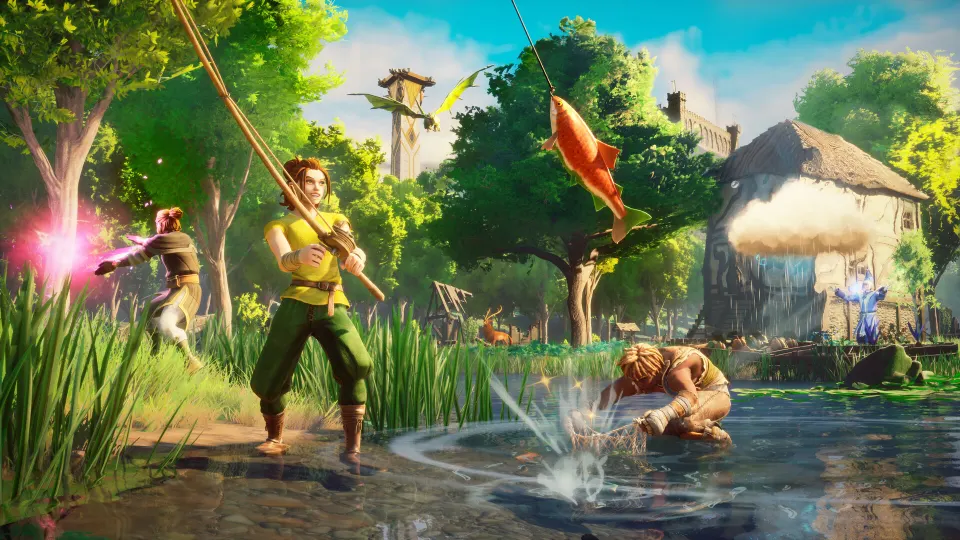
Build a sustainable route to 99
Reaching 99 Farming in RuneScape: Dragonwilds becomes more manageable when your farm can support repeated harvests without exhausting its seeds. A large harvest loses much of its value if replacing seeds or fetching supplies interrupts the next cycle. Start with compatible plots, establish a repeatable routine, and expand as your supplies allow.
Farming experience comes from more than harvesting. In a Reddit account of reaching every level 99, clawson-Bourne reports gaining XP through clearing plots, planting, watering, and fertilizing. That makes the entire cycle relevant when comparing methods.
Use these practical checkpoints to organize your progression:
| Stage | Main task | Check before moving on |
|---|---|---|
| Initial setup | Match seeds to the required plot tier | Complete a full growing cycle successfully |
| Establishing supplies | Track seeds remaining after replanting | Confirm that repeated harvests are affordable |
| Expanding production | Add plots alongside water and compost capacity | Finish maintenance without lengthy supply trips |
| Sustained training | Compare complete cycles and maintain XP buffs | Choose the routine with the strongest repeatable results |
Avoid copying a large farm before understanding its upkeep. The Reddit player used 90 plots, but that number describes one successful setup, not a required size. Their recommendation was to work as many plots as they could manage within a day.
Choose plots and control maintenance time
Plot compatibility comes before quantity. GGWTB's Farming guide recommends checking each seed's tooltip against the build-menu requirements, including Willow Plots for its suggested later-game crops. A plot's material name indicates compatibility; the guide distinguishes this from a requirement to build in a particular region.
The same guide states that farming plots can sit on natural surfaces such as flat dirt or solid rock, while player-built floor foundations block placement. Check placement with a small working arrangement before committing to a larger base layout.
Keep water access and compost production close enough that routine maintenance does not require crossing your base. GGWTB proposes a compact 10-by-10 arrangement, while clawson-Bourne describes supporting 90 plots with four wells, five Super Compost Bins, and ten buckets.
| Maintenance need | Reported approach | Practical consideration |
|---|---|---|
| Water supply | Nearby water stations; four wells in the Reddit setup | Keep refilling convenient as plot count grows |
| Area watering | Humidify used whenever available in the Reddit routine | Include its availability when timing your cycle |
| Fertilizer supply | Five Super Compost Bins supported the Reddit farm | Production must keep pace with consumption |
| Disease management | GGWTB suggests reactive Plant Cure for low-tier crops | Compare treatment time with preventative preparation |
The guides differ on compost priorities. Clawson-Bourne incorporates fertilizing into a large farm and notes that it awards XP. GGWTB favors skipping preventative compost on some low-tier cycles, using Plant Cure when needed, and reserving compost for valuable harvests where yield matters.
That is a tradeoff between preparation time, fertilizer XP, and crop output. Test both routines on manageable batches. Record the whole cycle, including gathering compost ingredients, rather than judging only the time spent applying fertilizer.
Choose crops by seed return and useful output
The highest XP per harvest does not automatically produce the quickest sustainable route. Seed replacement, maintenance, and useful byproducts all affect how much progress a crop supports across an evening of play.
The following options come from GGWTB's recommendations and clawson-Bourne's farming experience:
| Crop or group | Reported advantage | Limitation to consider |
|---|---|---|
| Pumpkins | GGWTB recommends them as a core later-game crop | Verify seed returns in your own routine |
| Irit | Recommended alongside Pumpkins; useful for potion production | Match seeds to compatible plots |
| Watermelons | GGWTB identifies them as an option for burst gains | Its guide warns of inconsistent seed sustainability |
| Cadavaberries | The Reddit player used them for Cooking and compost supplies | Later berry harvests award less Farming XP |
| Fellhollow crops | The Reddit player reports 405 XP on harvest | Treat this as a player-reported figure, not a universal crop value |
For a Farming-focused route, Pumpkins and Irit provide a starting combination to evaluate. Watermelons become easier to accommodate when you have spare seeds or another crop ready to cover shortages. Do not commit your entire farm to an option that repeatedly leaves empty plots.
Track seed sustainability after replanting. If your reserve contains fewer seeds each cycle, the farm is consuming its stockpile even when every individual harvest looks productive. Breaking even supports repetition; a growing reserve gives you room to expand.
Compare a new crop across three complete harvests, recording:
- Total Farming XP gained across the batch.
- Seeds remaining after the next planting.
- Active time spent maintaining the plots.
- Produce available for Cooking, potions, or compost.
Cadavaberries suit a broader skilling routine. Clawson-Bourne reports that raw, cooked, and burnt Cadavaberries stack to 99, weigh 0.1 each, and can feed Super Compost Bins. Their setup paired 90 plots with ten grills to process harvests.
That additional utility can justify lower repeat-harvest Farming XP when you also need Cooking progress and compost ingredients. For a dedicated Farming push, compare the berry routine against your other available crops instead of assuming its combined benefits make it fastest.

Upgrade equipment and measure XP honestly
The Dragonwilds Wiki's Farming training page lists a progression of watering cans and spades, alongside a Farmer's Hat. Use that equipment progression as a checklist while developing your farm.
| Equipment slot | Listed progression, early to late | How to use the information |
|---|---|---|
| Watering can | Wooden → Bronze → Steel → Adamant | Check which upgrade you can currently obtain |
| Spade | Wooden → Bronze → Steel → Adamant | Keep track of available tool tiers |
| Head | Farmer's Hat | Check its in-game properties when assembling farming equipment |
For XP bonuses, clawson-Bourne recommends food with Knowledgeable Nourishment, a ring or amulet with the relevant XP perk, and an appropriate potion. Check their effects and remaining duration before a substantial work session. Keep buffs active during XP-awarding actions where practical, including maintenance rather than focusing exclusively on harvesting.
Jojo Gaming Guides advertises an AFK Farming method at 82,264 XP per hour. Treat this as a creator-reported benchmark. The advertised number alone does not establish the required layout, starting equipment, or how much interaction the routine needs.
Measure your own rate with:
Hourly XP = XP gained ÷ elapsed minutes × 60
Include harvesting, replanting, refilling, and necessary supply trips. A measurement covering several complete cycles is more useful than timing one prepared harvest.
To estimate the remaining grind, divide the XP you still need by your measured hourly rate. Recalculate after a meaningful change, such as expanding the farm or switching crops. Avoid transferring level-99 XP totals from other RuneScape games into Dragonwilds.
FAQ
What is the best crop for runescape dragonwilds 99 farming?
GGWTB recommends Pumpkins paired with Irit for a sustainable later-game routine. The best choice for your farm also depends on seed returns and maintenance time. Cadavaberries offer additional Cooking and compost value, although subsequent berry harvests provide less Farming XP.
How many plots should I build?
Build as many as you can maintain consistently. A documented Reddit setup used 90 plots, while GGWTB suggests a compact 100-plot batch. Neither number is a minimum. Begin with a manageable layout and expand when water, compost, and seed supplies keep up.
Should I use Iron Secateurs or Uproot?
GGWTB recommends manual harvesting with Iron Secateurs when seed returns are a concern and identifies Uproot as a mass-harvesting option. Compare the seeds remaining after replanting under each method. A faster harvest is less useful if it creates a recurring replacement-seed trip.
Is compost necessary for every cycle?
GGWTB recommends reactive Plant Cure for some low-tier crops and prioritizes compost for valuable yields. The Reddit approach includes fertilizing and its XP contribution. Choose according to your crop needs, ingredient supply, and the time each routine takes.
Can I reach 99 Farming completely AFK?
A YouTube guide advertises an AFK method, but that label does not establish a fully unattended route. Plan around the planting, watering, harvesting, and supply management your setup requires. Measure both XP and interaction time before committing to a lengthy session.
How long does reaching 99 take?
There is no dependable single duration for every starting level and farm. Use your remaining XP and a measured rate covering complete cycles. The advertised 82,264 XP per hour is a comparison point, not a guaranteed completion-time calculation.