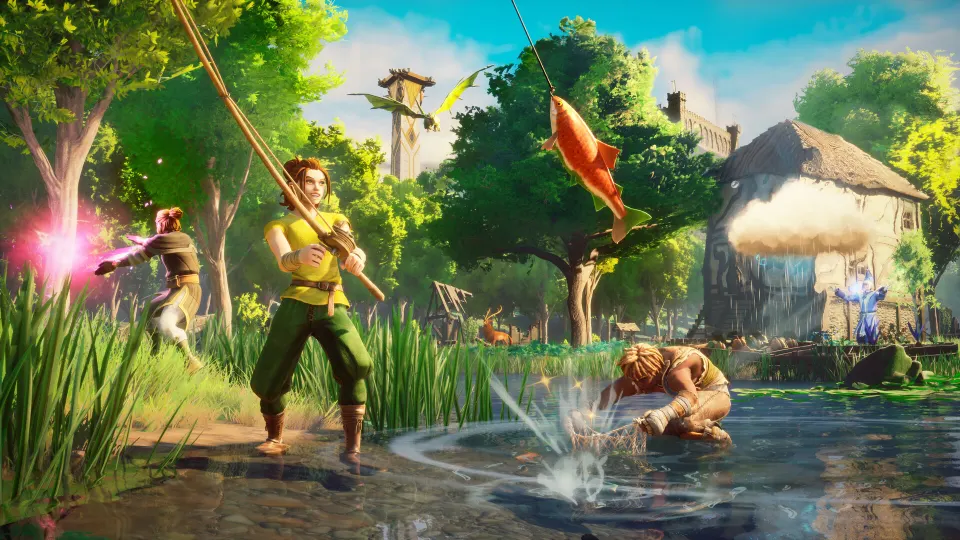
What reaching 99 Crafting unlocks
Reaching level 99 in RuneScape: Dragonwilds’ crafting skill unlocks the Artisan cape, which can save resources when repairing equipment. A merchant-based tanning method documented for version 1.0 also lets you earn Artisan XP while increasing your currency supply. That combination makes the route useful for both skill mastery and funding later activities.
The skill is called Artisan, although players sometimes call it Crafting. In an October 2026 Dragonwilds Community discussion, a player celebrating level 99 used “Crafting,” while commenters acknowledged the Artisan name. Look for Artisan when checking your progress and cape requirement.
The training method centers on buying Dragonwolf hides, processing them into dragon leather, and selling the leather back to a merchant. BiggySweats’ Dragonwilds 1.0 leveling guide describes this as a profitable Artisan loop. Its usefulness depends on the merchant’s prices, so check those before committing to a large production setup.

XP requirements and the final stretch
Boostroom’s September 29, 2026 leveling guide lists 1,000,000 total XP as the level 99 requirement for Dragonwilds 1.0 skills. Its milestones show why early progress can give a misleading impression of how much training remains.
The remaining XP below is calculated by subtracting each listed milestone from 1,000,000.
| Artisan level | Total XP at that level | XP remaining to 99 |
|---|---|---|
| 50 | 40,594 | 959,406 |
| 80 | 223,122 | 776,878 |
| 90 | 312,838 | 687,162 |
| 93 | 342,568 | 657,432 |
| 99 | 1,000,000 | 0 |
On this curve, level 93 represents only about 34.3% of the XP needed for mastery. The remaining six levels account for approximately 65.7% of the entire requirement. Reaching the nineties therefore does not mean the grind is almost finished.
For practical planning, separate ordinary progression from a dedicated push to 99. During progression, use gathered materials to make useful equipment and components. Once you can support repeated production, prepare a larger tanning operation for the expensive final stretch.
This also changes when preparation pays off. Improving your material supply, storage, and access to the merchant becomes especially valuable when hundreds of thousands of XP remain.
Prepare the Umbral Sands tanning setup
A focused YouTube Artisan leveling guide places the trading setup beside a merchant in eastern Umbral Sands. It recommends establishing a nearby teleport point and building multiple advanced tanneries around the trading area.
The same guide identifies the following preparation items. It does not establish a universal minimum number of tanneries; the larger setup is an example of scaling production.
| Preparation | Role in the method | Reported recommendation |
|---|---|---|
| Yew wood, mithril bars, and desert thread | Materials for advanced tanneries | Gather enough for multiple stations |
| Starting merchant currency | Purchases the first hides | Around 2,000 |
| Nearby teleport point | Makes returning to the merchant easier | Establish one at the trading area |
| Advanced tanneries | Process hides into leather | Approximately 40 in the creator’s setup |
This route requires access to the region, merchant, and processing infrastructure. Although the video presents it as a route from level 1 to 99, that does not make it an immediate starting-world activity. A low Artisan level and an undeveloped world are different constraints.
Before beginning a dedicated session:
- Collect the construction materials before buying your first large batch of hides.
- Arrange the tanneries so you can load and collect from them conveniently.
- Leave inventory space for hides and finished leather.
- Check the merchant’s hide purchase price and leather sale value.
- Prepare any applicable Artisan XP equipment, food, or focused potion before activating temporary bonuses.
Boostroom recommends starting timed XP boosts only when preparation is complete. It also cautions against assuming that multiple foods or multiple potions freely stack. Use bonuses appropriate to the skill and avoid spending their duration organizing storage or traveling.
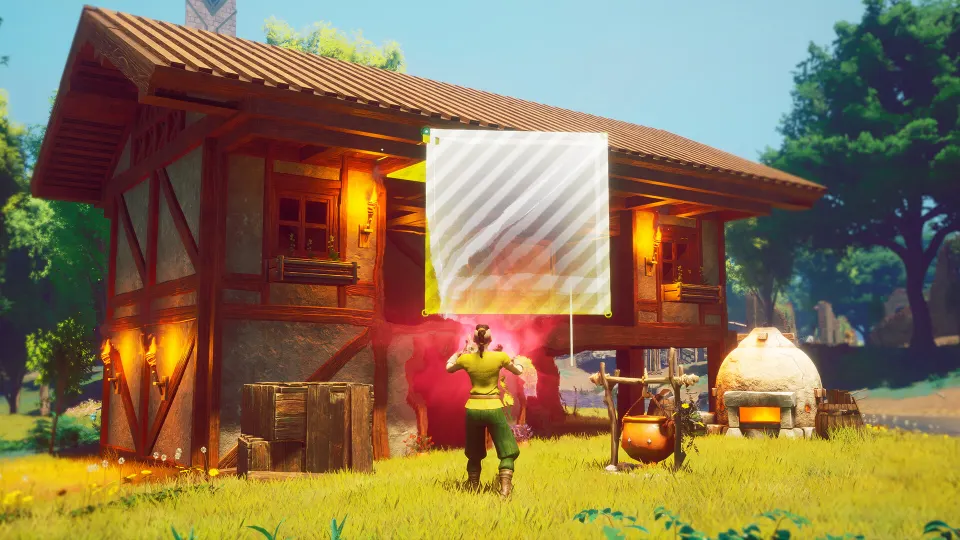
Run the hide-to-leather loop
Both the focused Artisan video and BiggySweats’ guide describe the same prices: 45 merchant currency for a Dragonwolf hide and 60 received for the resulting dragon leather. At those values, each completed purchase-process-sale cycle produces a 15-currency surplus per hide, alongside Artisan XP.
The table shows the trading arithmetic at those reported prices. It excludes the materials invested in building the tanneries.
| Hides processed | Hide purchase cost | Leather sale proceeds | Trading surplus |
|---|---|---|---|
| 1 | 45 | 60 | 15 |
| 10 | 450 | 600 | 150 |
| 44 | 1,980 | 2,640 | 660 |
With the recommended starting balance of approximately 2,000, you can afford 44 hides at 45 each, leaving 20 currency. Selling the resulting leather for 2,640 would bring your balance to 2,660. That larger balance can fund the next batch.
Repeat the process as follows:
- Buy hides: Purchase a batch that your current balance and available processing capacity can support.
- Load the tanneries: Spread the hides across your stations so several can process at once.
- Collect the leather: Return when the output is ready and gather it.
- Sell the output: Trade the leather back to the merchant.
- Reinvest: Buy another batch and continue until you reach your target.
The advantage comes from maintaining several processing stations, not simply buying an enormous stockpile. Match purchases to the amount you can handle comfortably, then expand as your balance grows.
The focused video reports reaching 99 in approximately 25–35 minutes with around 40 advanced tanneries. That is a creator’s reported result, not a guaranteed completion time. Allow for gathering construction materials, reaching the merchant, arranging stations, and managing batches when planning your own session.
BiggySweats flags the profitable loop as something that could change in an update. If the merchant’s prices differ in your game, recalculate the margin before expanding. At equal purchase and sale values, the currency growth disappears; below the purchase cost, every cycle consumes funds.
Craft and equip the Artisan cape
The Dragonwilds Wiki’s Capes of Accomplishment page lists the Artisan cape as the mastery reward requiring level 99 Artisan. Reaching that level unlocks the ability to craft the cape at the mystic forge.
| Cape detail | Requirement or benefit |
|---|---|
| Skill requirement | Level 99 Artisan |
| Crafting station | Mystic forge |
| Melee defence | +2 |
| Ranged defence | +2 |
| Magic defence | +2 |
| Equipped special effect | Gear repairs have a 10% chance to consume no resources |
The repair effect applies while the cape is worn. It gives a chance for an individual repair to cost nothing; it does not make every repair free or guarantee a free repair after a fixed number of attempts.
Keep the distinction between equipment and structures clear. The Artisan cape’s effect concerns gear repairs. The wiki assigns free structure repairs to the Construction cape, which is a separate mastery reward.
The same wiki page states that trimmed Capes of Accomplishment become available when you have more than one skill at level 99. Artisan can therefore be your first mastery milestone, with a second completed skill making a trimmed version available.
FAQ
Does “runescape dragonwilds 99 crafting” mean Artisan or Runecrafting?
It refers to reaching level 99 Artisan, the skill players sometimes call Crafting. Runecrafting is a separate skill with different training methods. For the tanning route described here, track your Artisan level and work toward the Artisan cape.
Is tanning the fastest way to reach 99 Artisan?
It is a documented rapid method, with one creator reporting 25–35 minutes using approximately 40 advanced tanneries. The available reports do not establish a universal fastest time across different starting levels, station counts, or game updates. Treat that timing as a useful example rather than a promise.
Can I start with fewer than 40 tanneries?
Forty is the creator’s reported setup, not a stated requirement for the trading loop. Fewer stations mean a smaller operation. Start with the number you can build and manage, then expand if the merchant still buys the finished leather for more than the hides cost.
Does the method actually make money?
At the reported prices, buying a hide for 45 and selling its processed leather for 60 produces a 15-currency trading surplus. That calculation does not recover or value your construction materials. Confirm both prices in your game before assuming every batch will increase your balance.
What should I do before I can reach Umbral Sands?
Continue normal progression and turn gathered resources into useful crafted items. Boostroom recommends connecting gathering with production: mine materials, process them, and craft equipment or components for Artisan XP. This builds your infrastructure while leaving the larger merchant-based tanning setup for when you can access it.